test blog from hybridSEO bot
As a local advisor focused solely on Key West, FL, here is a practical guide to the decisions that matter most on this island. Key West real estate rewards buyers and owners who understand block-by-block living, flood considerations, historic rules, walkability, and the tradeoffs between Old Town charm and the conveniences of New Town. If you want a home that fits your day-to-day life in Key West, FL—not just a postcard image—this guide will help you filter choices with confidence.
On a compact island, every detail is amplified: parking, noise, elevation, HOA rules, and even where your bike lives. Treat Key West real estate like a lifestyle match first and a property search second, and you’ll make smarter, longer-lasting choices.
Why buyers in Key West, FL need a hyper-local plan
Inventory is limited, waterfront demand is strong, and each neighborhood feels distinct within a few blocks. A clear plan will help you make fast, confident decisions without overpaying for features you won’t use. Consider:
- Daily routine: Where do you grocery shop, work, or take kids to school? How much time do you want to spend in transit on an island where bikes and scooters dominate?
- Parking: Do you need off-street parking, or is permitted street parking acceptable? In some streetscapes, a private space is a major value driver.
- Noise and privacy: Seasonal tourism can affect certain corridors. Visit at different times of day to gauge your comfort level.
- Flood and wind: Elevation, drainage, shutters, and impact openings aren’t cosmetic—they shape insurability, resilience, and peace of mind.
- Maintenance: Salt air and humidity require consistent care. Materials and finishes matter for durability in Key West, FL.
Bring this checklist to every showing; it keeps attention on what matters for living well in Key West real estate.
Old Town vs New Town: lifestyle, housing types, and tradeoffs
Both areas offer strong value—differently. Framing your decision through daily life, maintenance expectations, and ownership rules will clarify what to pursue in Key West real estate.
Old Town Key West: historic character and walkability
Old Town offers classic Conch architecture, tree-lined streets, and some of the most walkable blocks in Key West, FL. Expect smaller lots, tight setbacks, and a strong preservation culture. Exterior changes often require review by the local Historic Architectural Review Commission (HARC), which helps maintain the area’s character. Practical considerations:
- Parking: Off-street parking is limited; properties with a legal space carry a premium.
- Maintenance: Wood elements, decks, and fencing need vigilant care in salt air. Budget time and money accordingly.
- Noise and proximity: Some blocks feel lively; others are tucked away. Tour at night and early morning to gauge rhythm.
- Rental and HOA rules: Certain communities and condos in Old Town carry defined restrictions—review documents early.
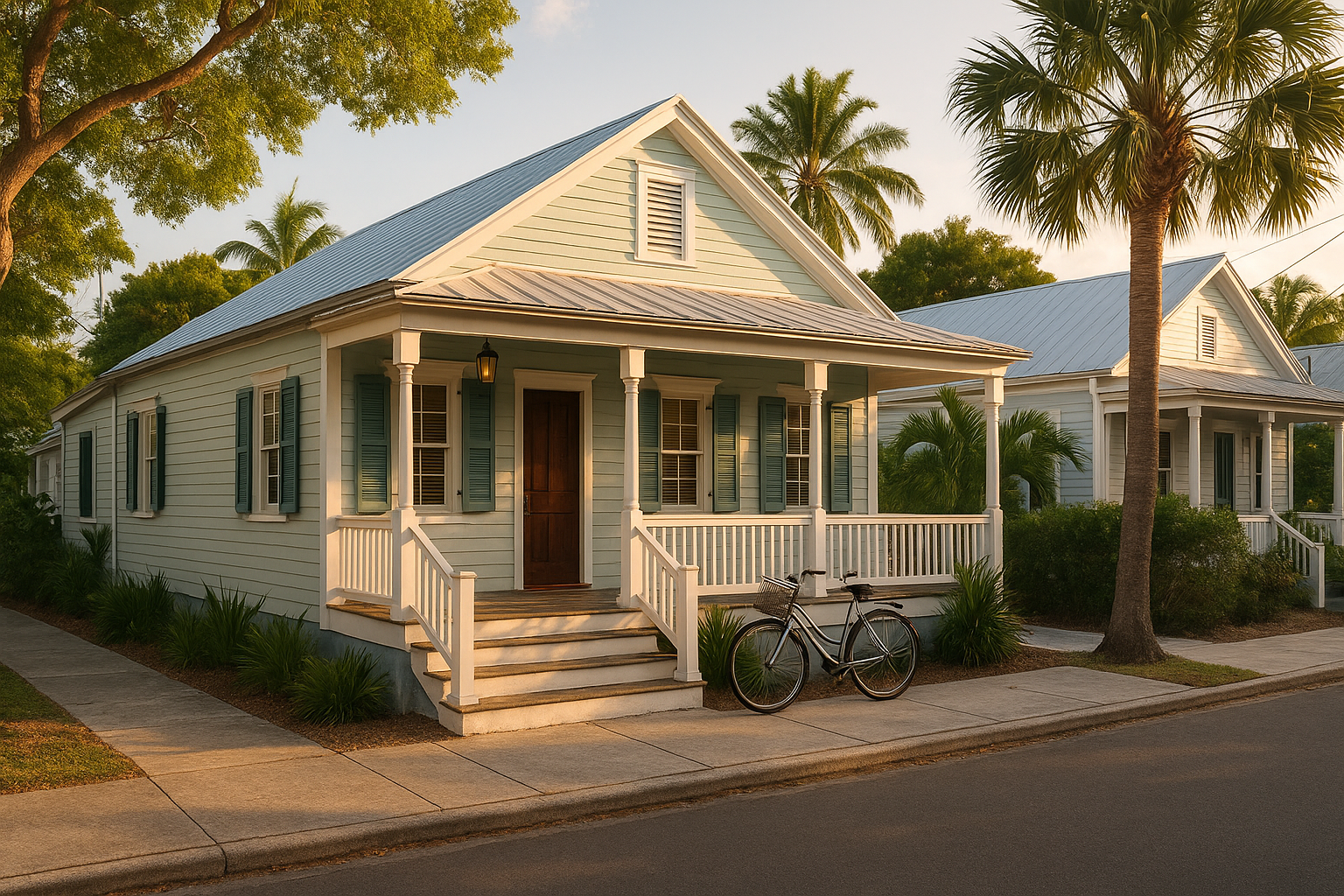
If you want a front porch lifestyle with easy access to daily amenities on foot or bike, Old Town aligns well—just enter with clear expectations about preservation rules and upkeep typical of historic homes in Key West, FL.
New Town Key West: space, storage, and convenience
New Town delivers broader streets, more consistent parking, and homes often built with features suited to modern island living. You’ll see wider driveways, garages or carports, fenced yards, and layouts that favor storage and indoor-outdoor flow.
- Parking and access: Easier drive-up living if you rely on a car or keep a boat trailer.
- Systems and elevation: Many homes incorporate shutters, impact windows, and higher finished floors that support resilience and insurability.
- Distance tradeoff: You’ll likely bike or drive for historic-district charm, but errands can be simpler with larger stores nearby.
If day-to-day convenience and space top your list, New Town can be a smart Key West real estate target, especially for owners who value storage and straightforward maintenance.
Walkability and daily life in Key West, FL
Walkability directly affects value and comfort. In Old Town and the Casa Marina area, you can often reach essentials by foot or bike: grocers, pharmacies, parks, and waterfront paths. Midtown offers a blend—quieter residential streets with bikeable access to services. In New Town, sidewalks and bike lanes support easy movement to shops and schools.
Practical tips:
- Map your essentials: Within a half-mile, can you reach your top five destinations?
- Night test: Walk or bike the route after sunset to assess lighting, traffic, and noise.
- Storage: Prioritize properties with secure bike and scooter parking; it’s a real convenience factor in Key West, FL.
Because of these day-to-day factors, buyers often place a premium on walkable blocks, which feeds directly into long-term satisfaction with Key West real estate.
Flood zones and insurability in Key West, FL
Flood zones are a core part of due diligence here. Focus on how a specific property manages water rather than assuming risk from a map alone. Key action items:
- Elevation certificate: Understand finished-floor height relative to base flood elevation.
- Mitigation features: Look for impact-rated openings, shutters, elevated mechanicals, backflow prevention, proper grading, and functional drainage.
- Maintenance history: Ask about prior water intrusion, roof age, and any documented improvements.
- Insurance conversations: Obtain quotes early; features like roof shape, strapping, and window ratings influence premiums in Key West, FL.
These steps help you compare homes apples-to-apples and avoid surprises, which is essential in Key West real estate.
Condos vs single-family homes in Key West, FL
Condos can simplify maintenance and offer amenities, while single-family homes deliver privacy and control. Align the choice to your lifestyle:
- Condos: Lower exterior maintenance, amenities, and predictable budgets through association management. Review HOA financials, reserves, special-assessment history, rental rules, pet policies, and noise expectations.
- Single-family: More autonomy for storage, pets, and outdoor space. You manage all upkeep—roof, landscaping, exterior paint, and systems.
In areas like Old Town and Truman Annex-adjacent pockets, condo rules can be detailed—read documents before you fall in love with a unit. If you want maximum flexibility for projects or parking, a single-family home in New Town or Midtown may suit you better. Match these realities to your priorities within Key West real estate.
Waterfront realities in Key West, FL
Waterfront demand is steady, but not all waterfront is the same. Consider:
- Exposure and protection: Open-water exposure offers sweeping views but can face stronger wind and wave action. Canal-front living offers boat access with more protection.
- Dockage details: Depth, width, and turning radius matter for your boat. Confirm conditions at both high and low tide.
- Seawalls and maintenance: Inspect for cracks, tie-back condition, and drainage weeps; plan for long-term care.
- Privacy and noise: Water activity patterns vary by location. Visit at different times to understand sound and traffic.
Ask for permits and documentation for docks and lifts through the City of Key West, and integrate those findings into your Key West real estate valuation.
Parking, storage, and access on a compact island
Space is precious in Key West, FL. Before you commit, decide what you must have:
- Off-street parking: A major convenience in Old Town and select Midtown blocks.
- Secure storage: Scooters, bikes, paddleboards, and tools need protected space—check sheds, carports, and closets.
- Access and curb cuts: Confirm legal curb cuts and any restrictions on altering driveways or adding gates.
These details materially affect daily happiness—and they shape resale in Key West real estate.
A smart buying strategy for Key West, FL
Move quickly, but not blindly. A focused, local process helps you win the right home:
- Define non-negotiables: Parking, elevation, bedroom count, outdoor space, and HOA tolerance.
- Get fully underwritten: Strengthen your offer in a market with limited options.
- Tour at varied times: Morning, evening, weekday, weekend—feel the true rhythm.
- Due diligence: Order inspections tailored to Key West, FL—moisture and termite checks, roof evaluation, wind mitigation, four-point, sewer lateral camera (where applicable), and insurance quotes tied to property specifics.
- Permit research: Verify improvements and open/closed permits with the City of Key West.
- Offer strategy: Be decisive on well-matched homes and disciplined on those that miss your essentials.
This approach lets you act fast without sacrificing the fundamentals that protect value in Key West real estate.
For homeowners: preservation, maintenance, and resilience
Protecting value in Key West, FL starts with consistent care suited to salt air and humidity:
- Roof and openings: Prioritize impact-rated windows/doors, maintained shutters, and timely roof upkeep.
- Paint and caulk: Stay ahead of wood and trim maintenance; small lapses compound quickly.
- HVAC and humidity: Service equipment regularly and consider dehumidification for comfort and longevity.
- Drainage: Keep gutters clear and direct water away from structures; test sump and backflow components if present.
- Landscaping: Choose salt- and wind-tolerant plantings that won’t threaten foundations or fences.
Whether you own in Old Town, Midtown, or New Town, these habits support smoother insurance renewals and stronger resale—key outcomes in Key West real estate.
FAQ: Key West, FL real estate
What makes Old Town Key West unique for homebuyers?
Historic architecture, porch culture, and high walkability define Old Town. Expect tighter lots, limited parking, and preservation oversight for exterior changes. If you prize character and a pedestrian lifestyle in Key West, FL, Old Town is a top contender.
How do I evaluate flood zones when buying in Key West, FL?
Start with an elevation certificate, review mitigation features (impact openings, shutters, elevated mechanicals), and obtain insurance quotes early. Ask about prior water intrusion and drainage improvements. Compare homes by actual risk controls, not just a letter on a map.
Are condos a good option for island living in Key West, FL?
They can be. You’ll gain simplified exterior maintenance and potential amenities. Read HOA documents for reserves, rules, rental limits, and assessment history. If you value control over projects or parking, a single-family home may fit better.
How does walkability impact home choices in Key West, FL?
Walkability shapes daily satisfaction and often supports value. Map your essentials and test routes by day and night. Prioritize secure bike/scooter storage and consider noise patterns on busier blocks.
Best areas for a walkable lifestyle in Key West, FL?
Old Town and the Casa Marina area are highly walkable; Midtown blends quiet streets with bikeable access to services. Evaluate specific blocks, as feel can change quickly.
How do HOA rules affect property ownership in Key West, FL?
HOAs and condo associations set standards for maintenance, aesthetics, rentals, and pets. Strong reserves are a positive; frequent special assessments are a caution. Read the full documents and minutes before committing.
Is waterfront ownership different in Key West, FL?
Yes—verify dock permits, seawall condition, tidal access, and exposure to wind and waves. Maintenance and insurance considerations differ from non-waterfront homes; factor them into total cost of ownership.
Key West real estate rewards clarity. Define the life you want in Key West, FL, then pursue the home, street, and ownership structure that supports it. With a block-specific lens and disciplined due diligence, you can buy—and own—with confidence.
Leave a Reply